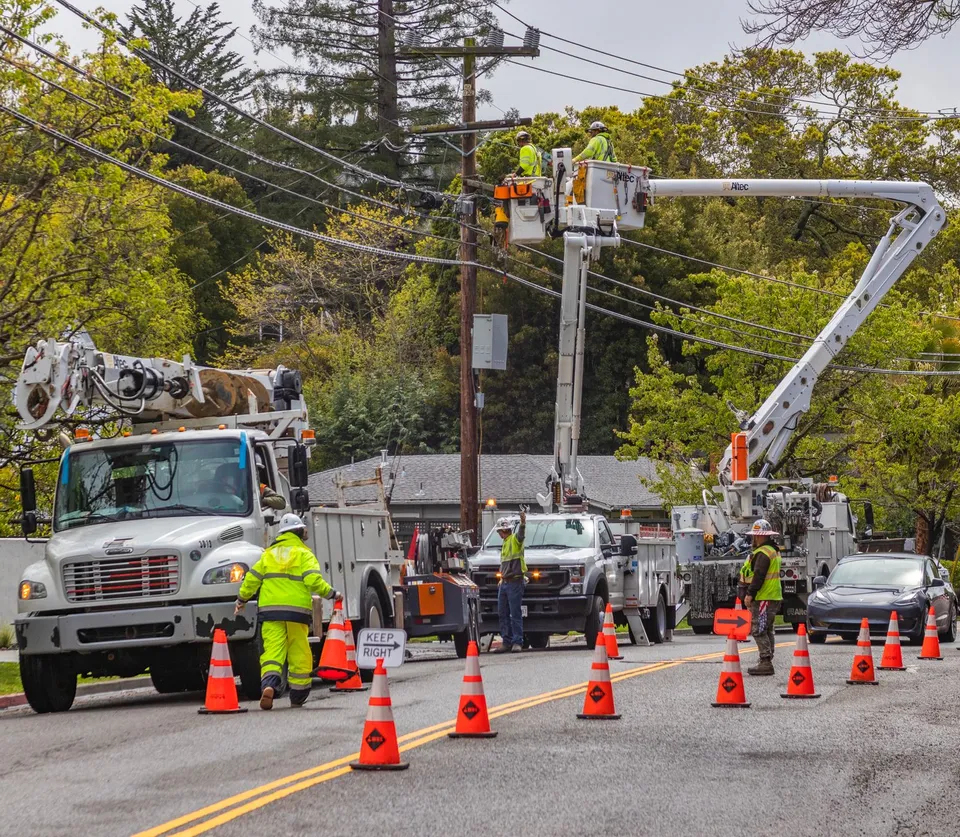
On a northern Minnesota crew, “helper” can sound harmless and flexible. In practice, it can decide what a worker may touch, who must supervise the work, and whether the role is a stepping-stone or a dead end. That matters in a region where one employer may mix residential remodeling, commercial installation, civil work, and service calls, while Minnesota’s licensing rules still draw hard lines around electrical and plumbing tasks. DLI says a registered unlicensed electrical worker must stay within the employer’s authority and work under licensed supervision, and registered unlicensed plumbers must be W-2 employees of an authorized plumbing contractor and work under direct supervision by a licensed master or journeyworker plumber.
The word “helper” is not a blank check
A helper title tells you someone may support the crew, but it does not say which trade duties are allowed. That distinction is especially important on jobs where the work itself is regulated. DLI’s electrical guidance makes clear that registration is not the same thing as independent authority to perform electrical work, and it specifically says unsupervised electrical work is prohibited. Its plumbing guidance is just as specific: the worker’s employer relationship, registration, and licensed supervision all have to fit the rule, even if the site has plenty of plumbing to do. In other words, a capable person with construction or maintenance experience is not automatically authorized for electrical or plumbing work just because the crew is short-handed.
That same caution applies to homeowners’ jobs. DLI says a person or company contracting directly with an owner of a one- to four-unit residential property to work in more than one special-skill area generally needs the proper residential contractor or remodeler license. A helper on a remodeling crew may be valuable, but the helper is not the business authority. Employers that blur those roles can create confusion for the crew and for the customer, especially when the project crosses from carpentry into electrical, plumbing, or other regulated work.
Northern Minnesota does not behave like one labor market
The local setting matters because the region’s construction base is not evenly spread out. DEED’s county profiles show 2025 construction-industry payroll jobs of 2,344 in Crow Wing County, 1,209 in Itasca County, 1,534 in Beltrami County, and 480 in Cass County. Those counties also had different construction shares of all payroll jobs: 7.5% in Crow Wing, 7.3% in Itasca, 7.4% in Beltrami, and 4.5% in Cass. The counts describe construction establishments, not every carpenter, laborer, or self-employed worker in the area, but they do show why one generic helper ad does not fit Brainerd-Baxter, Grand Rapids, Bemidji, or Walker equally well.
The year-to-year movement also differs by county. Itasca’s construction payroll jobs rose 18.1% between 2024 and 2025, while Crow Wing’s fell 0.5%, Beltrami’s rose 1.4%, and Cass’s fell 3.8%. That is not a forecast and it does not prove that any one contractor is hiring or shrinking, but it does show that the same title can sit inside different local business conditions. A helper role on an expanding remodel crew in one county may look very different from a helper role on a smaller rural maintenance crew in another.
Civil and heavy work add another wrinkle. DEED’s Northeast Minnesota study found that heavy and civil engineering construction averaged 1,273 quarterly payroll jobs in the first quarter and 2,110 in the third quarter between 2019 and 2023. That seasonal swing helps explain why a helper on road, earthwork, or infrastructure projects may see a different schedule pattern than a helper on indoor renovation or service work. It is a reminder to read the job by project type, not just by title.
What employers should spell out before they call someone a helper
A strong posting should say what the helper will actually do: move materials, prep work areas, assist installation, clean up, or support a crew lead. It should also say what the helper will not do without the right authority. That matters because construction work often crosses boundaries between laboring, carpentry, trade installation, and supervision. It also matters because “helper” can mean very different things on a home remodel, a commercial buildout, a highway project, or a service route with multiple stops.
Employers should also describe the work pattern. In northern Minnesota, commute averages do not answer the question a construction applicant really needs: where does the shift begin, and how often does the crew change sites? DEED’s ACS-based county figures show that 84.1% of Crow Wing resident workers worked in their county of residence, with a mean travel time of 23.1 minutes, while Itasca’s figures were 82.8% and 24.1 minutes. Those are useful labor-market clues, but they do not measure a worker’s trip to a rotating site, a shop start, or an overnight civil job. If the work involves a shop meeting point, repeated site changes, or travel beyond the county, say so plainly.
What applicants should ask before saying yes
Applicants should treat “helper” as the start of the conversation, not the end. Ask whether the role is part of a path into apprenticeship, and ask which tasks are considered training and which require specific supervision or registration. Minnesota’s registered-apprenticeship directory includes carpenter, cement mason, construction craft laborer, operating engineer, HVAC technician, pipefitter, plumber, sheet metal, and other programs, but DLI also says the directory is not exhaustive and that sponsors and employers lead hiring. A helper job may connect to one of those routes, but it is not the same thing as a registered apprenticeship seat.
It is also fair to ask who signs off on the work. On electrical and plumbing assignments, the answer should be specific, not vague. DLI’s rules make supervision part of the job structure, not just a courtesy. If a posting says the crew “trains,” that should not be mistaken for a license or for permission to work unsupervised. A good offer will name the trade boundary, the supervisor, and the likely project type so the worker can judge whether the role matches current skills and future goals.
A better helper job is not the one that sounds broadest. It is the one that clearly states where the worker fits, what the worker may learn, and which tasks stay outside the line until the right supervision, registration, or credential is in place. For employers and applicants in northern Minnesota, that clarity saves time on both sides.
Employers can discuss trade requirements, project location, schedule, and coverage through the request-candidates form. Applicants can share skills, availability, and work preferences by calling Express or using the contact emails provided for Grand Rapids and Brainerd.