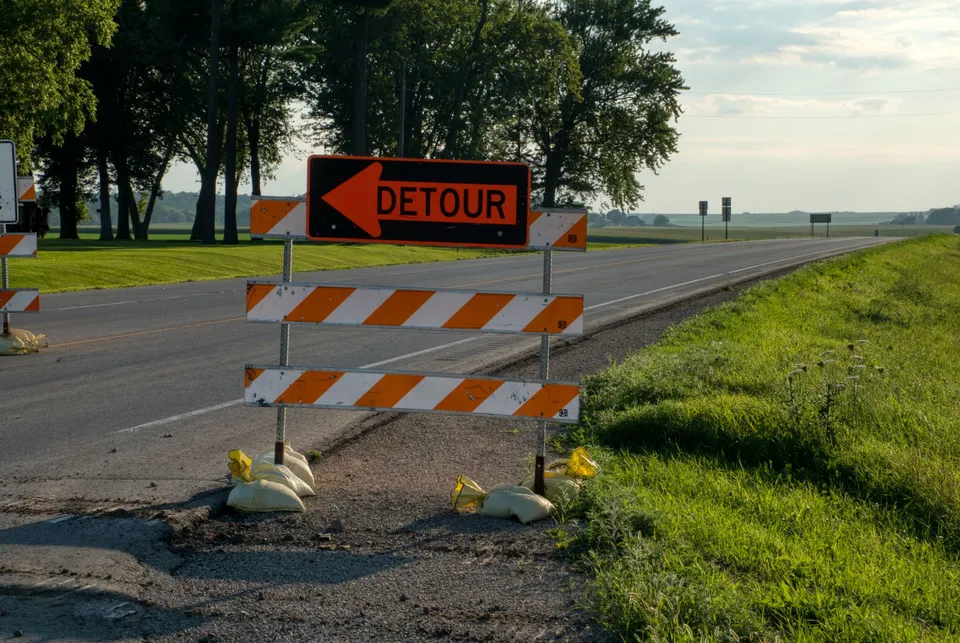
In northern Minnesota, the most important detail in a construction offer is often not the wage—it is where the day really begins. A crew might meet at a shop in the morning, start at a remote site, or move between several locations before noon. That difference changes the cost of getting to work, the amount of unpaid time a worker absorbs, and the kind of experience the employer actually needs. It also matters locally, because the labor market around Brainerd-Baxter is not the same as the one around Grand Rapids, and county-level construction employment shows that those nearby places operate at different scales. Crow Wing County reported 2,344 construction-industry payroll jobs in 2025, while Itasca County reported 1,209; those figures are county measures, not city counts, but they are the best public proxy in the available evidence for the surrounding markets.
That is why a simple question can save a worker from a bad fit: where does the paid shift begin? In a shop-based role, the answer may be the clock-in point. In a field-based role, the answer may be the first site gate, a materials yard, or a daily meeting point that changes with the job. Rural distance makes that distinction practical, not theoretical. DEED’s county commuting data show that most resident workers in Crow Wing and Itasca work in their home county—84.1% in Crow Wing and 82.8% in Itasca—and their mean travel times are already around 23 to 24 minutes before a construction employer adds a changing site, a second stop, or winter road conditions.
That same evidence helps explain why housing and travel need to be discussed together, especially for applicants who may relocate or commute from a different county. In the 2020–2024 ACS figures reproduced by DEED, median monthly rent was $971 in Crow Wing and $988 in Itasca, while 44.5% of Crow Wing renters and 58.1% of Itasca renters spent at least 30% of household income on rent. Those are not construction-specific numbers, but they show why “just drive a little farther” is not always a free solution. A job that requires early starts, a work truck, or repeated site changes can fit one household and strain another.
A better offer description separates at least four questions:
- Where is the primary reporting point?
- Where does paid time start and end?
- How often will the crew change locations?
- Is overnight travel, lodging, or mileage reimbursement part of the arrangement?
Those are not minor details. They shape whether a role feels like steady local work, a traveling assignment, or a mobile service job. They also help employers match the right person to the right work instead of assuming every experienced candidate wants the same schedule. A carpenter who wants one long project may not want multiple service stops. A laborer who likes variety may not want a fixed production site. The work may still be construction either way, but the job is not the same.
Seasonal change is another reason northern Minnesota employers should explain the schedule plainly. DEED’s Northeast Minnesota research found that heavy and civil engineering construction had a quarterly employment range from 1,273 in the first quarter to 2,110 in the third quarter during the 2019–2023 period, with an annual average of 1,718. That does not mean every contractor shuts down in winter, and it does not predict any one company’s staffing. It does show that some work families face much larger seasonal swings than office jobs do, which is exactly why applicants should ask whether the role is tied to road work, site development, or indoor renovation.
The strongest job offers in this market do not just list a trade and a wage. They describe the setting: one site or many, shop or field, local or travel-heavy, steady or seasonal, occupied building or open site. That is especially important in northern Minnesota, where a Brainerd-area commute, a Grand Rapids-area commute, and a county-level travel pattern can all point to very different realities even when the job title sounds similar. A short conversation about location and timing can reveal whether the offer matches the rest of the worker’s life, not just the right tool belt.
If you are hiring, spell out the reporting point, travel expectations, and any site-to-site movement before you talk about pace or pay. If you are applying, ask those same questions before you decide whether the role is worth the drive. Employers can discuss trade requirements, project location, schedule, and coverage through request candidates. Applicants can also call Express or email the team at apply@expressprosmn.com or grandrapidsmn@expresspros.com.