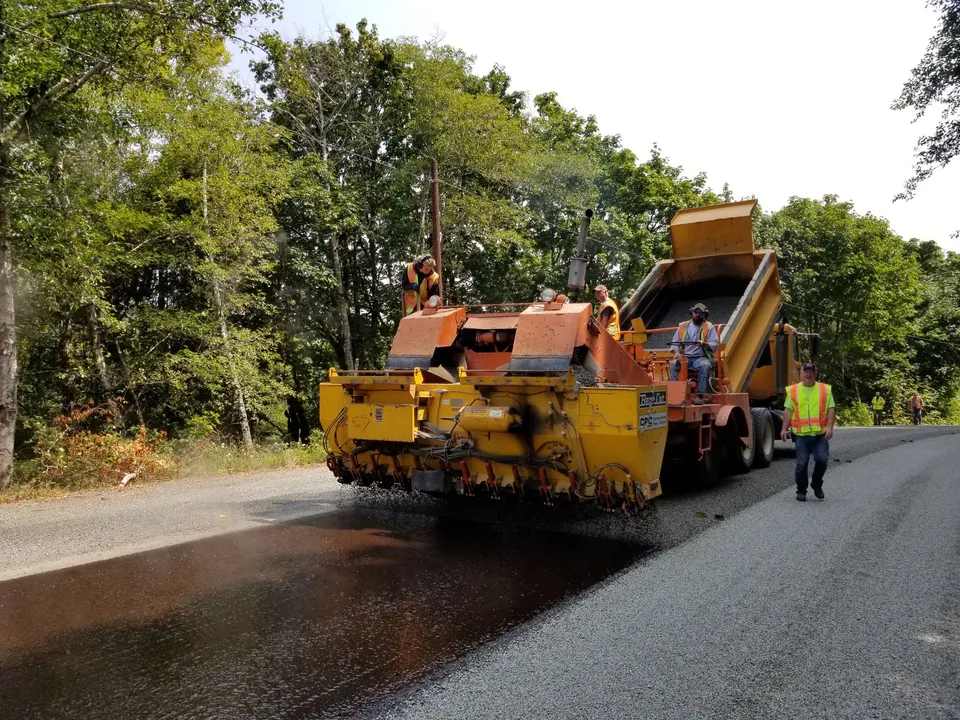
In northern Minnesota, a construction job can look straightforward on paper and still fail in practice if the handoff is vague. A worker may know carpentry, equipment operation, concrete support, or service calls, but still be the wrong fit if nobody has explained who prepares the site, who verifies the next step, and who has authority over the work. That matters more than people sometimes admit, especially in places where the construction market is not one simple block of jobs. Crow Wing County had 2,344 construction-industry payroll jobs in 2025, Itasca had 1,209, Beltrami had 1,534, and Cass had 480—figures that show very different local scales, not one uniform hiring pool.
The region also moves with the season. DEED’s Northeast analysis found 7,341 construction-industry jobs in 2025, down 1.5% from 2024, while heavy and civil engineering construction showed a large quarterly swing in historical payroll data, from 1,273 average jobs in the first quarter to 2,110 in the third. That does not mean every crew shuts down in winter. It does mean employers should be careful about assuming the same schedule, same site conditions, and same staffing pattern all year long. A road, utility, or earthwork opening is not the same as an indoor remodel, an occupied-building service call, or a shop-based fabrication assignment.
The handoff is the job detail that changes everything
For a laborer, the important question may be: what gets the site ready, and what gets passed to the next trade? Laborers move materials and prepare work areas; concrete crews work inside a time-sensitive sequence; operators move earth or materials and support site work. Those tasks depend on layout, deliveries, access, and who is ready next. A helper title alone does not tell an applicant whether the job is mostly clean-up, material handling, spot checks, traffic control support, or repeated transitions between crews. Minnesota’s apprenticeship directory is a pathway into some of those trades, but it is not a promise of a seat in any one county.
For electrical and plumbing work, the handoff includes legal authority, not just skill. Minnesota DLI says a registered unlicensed electrician must work under the authority of the employer and under a licensed person for that work, and unsupervised electrical work is not allowed. For plumbing, DLI says an unlicensed person must be registered and work under direct supervision by a licensed master or journeyworker plumber, with specific conditions for who may employ that worker. In other words, experience around related equipment does not automatically make a person authorized to perform regulated trade work. A staffing arrangement or a friendly site lead does not replace the rule.
Why this matters in a rural region
Northern Minnesota adds geography to the mix. DEED’s county profiles show that most residents work relatively close to home—84.1% of Crow Wing resident workers and 82.8% of Itasca resident workers worked in their county of residence in the 2020–2024 ACS data, with mean commute times of 23.1 and 24.1 minutes. Those are all-worker figures, not construction-specific commute statistics, but they point to a practical truth: many people are planning around local routines, not endless travel. A construction opening should therefore say where the shift starts, whether the crew meets at a shop or at the site, and whether the worker is expected to move between locations during the week.
Housing also shapes whether a candidate can realistically take the job. DEED’s county profile data show median monthly rent of $971 in Crow Wing and $988 in Itasca, while owner-occupied home values were $306,800 and $225,200. Those numbers do not guarantee a place to live, but they do show why “just relocate” is not a simple answer for every applicant. If an opening expects early starts, changing worksites, or overnight travel, the job post should say so plainly. Pay, overtime, travel compensation, per diem, and benefits are different questions and should be described separately rather than blended into one hourly number.
What employers should spell out
A strong northern Minnesota opening does not just name a trade. It tells the reader what the work family is: carpentry, laboring, concrete, equipment operation, service, remodeling, supervised regulated trade work, or coordination. It also says who leads the work, what the first day looks like, and which tasks need extra authorization. A residential remodeler has different obligations than a commercial subcontractor, and Minnesota DLI treats residential contractor licensing, electrical registration, and plumbing registration as separate issues. The clearer the handoff, the easier it is to match the applicant to the real job instead of a vague title.
What applicants should ask before they say yes
Applicants can protect themselves by asking the same practical questions: Where does the shift begin? Who gives the day’s assignment? Is this mostly one site, a service route, or a changing project schedule? What experience counts toward the role, and what experience only helps as background? A former maintenance worker may understand troubleshooting, but that does not automatically equal Minnesota electrical or plumbing authorization. A helper may be useful on a crew without being an apprentice. And a training pathway is still not the same thing as a guaranteed opening. DLI’s apprenticeship directory shows many trade routes, but sponsors and employers still control hiring and schedules.
The best northern Minnesota construction conversations are the ones that make the handoff visible. When employers define the work sequence and applicants describe what they have actually done, both sides waste less time and make better matches.
If you are hiring, share the trade needs, project location, schedule, and coverage questions through request candidates. If you are job seeking, send your skills, availability, and work preferences through the appropriate application link, or call Express.