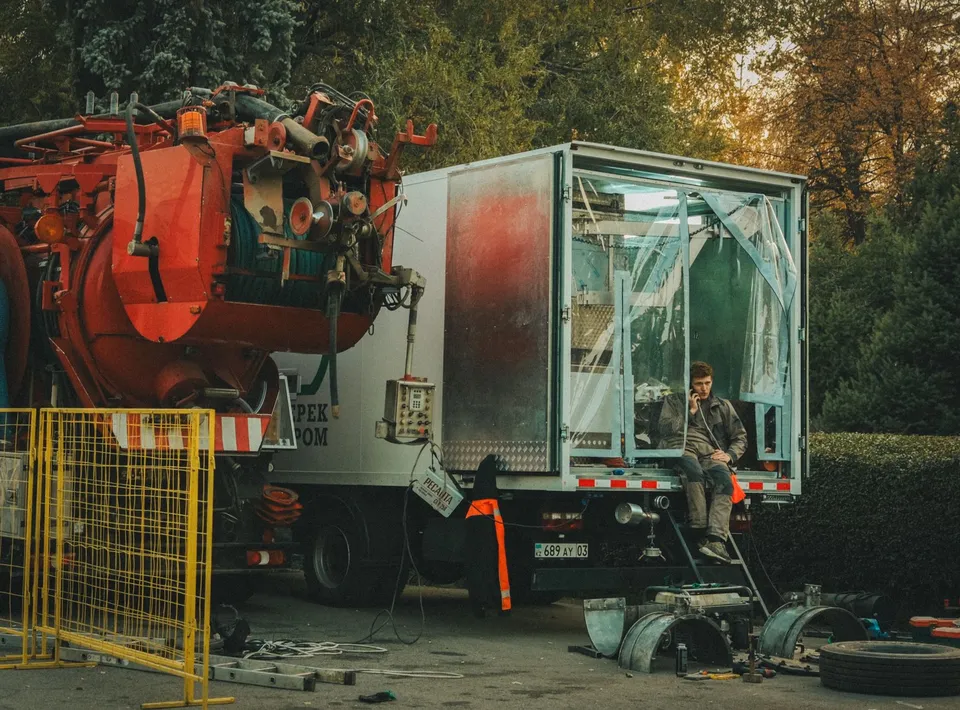
A welder in Grand Rapids, an equipment mechanic in Brainerd, and a service tech in Bemidji may all use torches, test instruments, and hand tools. That does not mean they do the same kind of work. In northern Minnesota, the difference between construction, repair, and service is often the difference between one supervisor’s jobsite rules, another employer’s shop standards, and a completely different set of licensing or registration requirements.
That distinction matters because the local market is not one flat hiring pool. DEED’s county profiles show very different construction-industry payroll counts across nearby areas: Crow Wing had 2,344 construction jobs in 2025, Itasca 1,209, Beltrami 1,534, and Cass 480. Those are establishment payroll jobs, not counts of carpenters, plumbers, or open positions, and they do not include every self-employed worker. Still, they show why a job in Brainerd/Baxter can sit in a much larger construction base than one in Cass County, while Grand Rapids and Bemidji each operate in their own local mix of employers and project types.
Why the label on the building is not enough
A posting that mentions fabrication, maintenance, installation, or troubleshooting may still belong to a manufacturing, repair, wholesale, or service employer rather than a construction contractor. That is especially true when the work happens in a shop, on a route, or at customer locations instead of on a defined project site. The same tool skills can support different business models, but the employment terms are not interchangeable.
For applicants, the practical question is simple: what is the work family? A construction laborer prepares areas and moves material. A mechanic repairs equipment. A service technician diagnoses a customer problem and may return to the same location another day. A fabricator may build parts for a named project without being part of the field crew that installs them. Those distinctions help explain who assigns the work, where the shift starts, and whether the job is tied to one project or many short calls.
Licensing and supervision change the answer
This is where construction hiring can go wrong. In Minnesota, experience near a trade is not the same thing as authority to do that trade independently. DLI says registered unlicensed electricians must work under the employer’s authority and under a person licensed for that work, and unsupervised electrical work is prohibited. DLI gives similar guidance for plumbing: an unlicensed person must be registered and work under direct supervision by a licensed master or journeyworker plumber, with a narrow exception for certain small communities.
So if a resume says “maintenance,” “low-voltage,” “installation,” or “equipment repair,” that may be useful experience, but it is not automatic authorization for electrical or plumbing work. A former maintenance worker may understand troubleshooting and documentation yet still need the relevant registration and supervision to perform regulated tasks. Employers benefit from spelling out not just the toolset, but the legal boundary of the job.
The season can change the work family
Northern Minnesota also makes the work-family question more important because the schedule can shift with the type of project. DEED’s Northeast study of 2019–2023 payroll data found heavy and civil engineering construction averaging 1,273 jobs in the first quarter and 2,110 in the third quarter. That seasonal swing does not prove layoffs or hiring shortages, but it does show why a road, earthwork, or utility role can feel very different from a year-round service or repair position.
A worker who wants steadier indoor work may prefer remodeling, mechanical service, or shop-based repair. Someone who wants longer project runs may fit concrete, civil, or commercial framing better. Neither choice is better in the abstract; they answer different needs.
A better way to read a job posting
Before saying yes, ask four questions:
- Where does the work happen? A shop, a jobsite, a route, or a mix?
- Who controls the task? A contractor, a host employer, or a service dispatcher?
- What is authorized? General labor, helper work, or regulated electrical or plumbing duties?
- What is the schedule? One project, repeated calls, or seasonal peaks?
Those questions help applicants avoid misreading a repair role as a construction trade and help employers avoid promising a role that the person cannot legally or practically perform. They also make the most of local realities: different county labor markets, different project types, and different expectations between Brainerd, Grand Rapids, Bemidji, the Iron Range, and the more rural counties around them.
The best hiring conversations in northern Minnesota do not stop at a wage number. They clarify whether the job is construction, repair, installation, or service; whether the worker is a helper, apprentice, or licensed trade; and whether the work is tied to a project, a customer route, or a maintenance schedule. That is the difference between a good fit and a costly mismatch.
If you are hiring, you can describe those details through request candidates. If you are looking for work, share your skills, availability, and work preferences through the current application links, or call Express.