In northern Minnesota, the hardest part of hiring is often not finding someone who has “construction experience.” It is figuring out which construction job you are actually trying to fill. A Brainerd-area remodel opening, a Grand Rapids civil crew slot, and a Bemidji service-tech assignment can all sound like general construction work on paper, yet they may require very different tasks, supervision, travel patterns, and legal boundaries. That is why a job title alone is a weak filter in a region where Crow Wing County had 2,344 construction-establishment jobs in 2025, Itasca County had 1,209, Beltrami County had 1,534, and Cass County had 480. Those are not city counts and not open-position counts; they do show that nearby communities sit in different labor markets with different scales and mixes of work.
For employers, that distinction matters because construction is not one occupation. Minnesota’s apprenticeship and licensing structure separates helpers, registered apprentices, journey-level workers, and licensed or supervised trades, and it does not let one label substitute for another. DLI’s apprenticeship directory spans carpenter, cement mason, construction craft laborer, operating engineer, HVAC technician, pipefitter, plumber, sheet-metal, and more, but the directory itself is not a promise that a seat is open in Brainerd, Bemidji, or Ely. Entry pathways and hiring schedules differ by sponsor, trade, and employer.
Start with the work, not the slogan
A better opening question for a job description is simple: what will this person do on an average Tuesday? That question forces clarity about the trade boundary and the work setting.
- A carpenter on a new-home crew may spend the day on layout, framing, and finish details.
- A laborer may prepare the site, move materials, and support other trades.
- A concrete worker or equipment operator may work in a time-sensitive sequence tied to forms, placement, access, and delivery.
- A service or installation technician may move between customer sites, troubleshooting equipment and managing shorter visits.
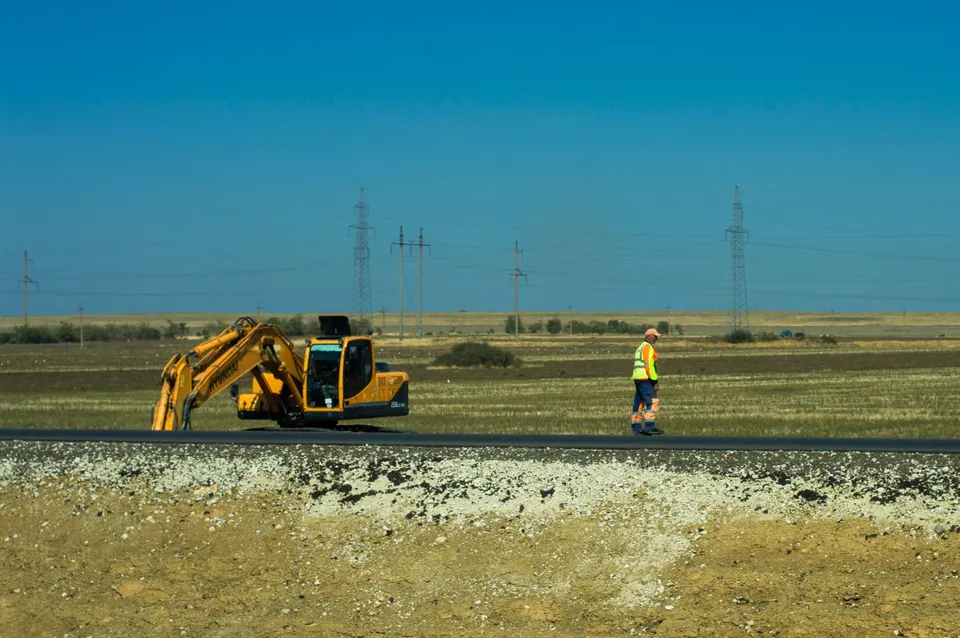
Those are not interchangeable duties. BLS notes that construction laborers’ schedules vary, some northern-climate work is weather-limited, and certain highway projects run overnight, while northern Minnesota DEED data show heavy and civil engineering construction can swing sharply by season: in Northeast Minnesota, average quarterly employment in that industry ranged from 1,273 in the first quarter to 2,110 in the third between 2019 and 2023. That does not mean every outdoor crew shuts down in winter, but it does mean schedule language should be specific instead of implied.
The second question is supervision
Northern Minnesota employers often need to sort out not just who can do the task, but under whose authority it happens. Minnesota DLI makes a sharp distinction between experience and authorization. A registered unlicensed electrician must work within the employer’s authority and under licensed supervision; unsupervised electrical work is not permitted. Registered unlicensed plumbers also must fit DLI’s rules on employer relationship and direct supervision. In residential work, a company that contracts directly with a homeowner for more than one special-skill area may need a residential building-contractor or remodeler license. None of those rules are satisfied simply because a worker has “done it before” somewhere else.
That matters on shared worksites. A staffing agency, a host employer, and a site supervisor may all be involved, but the person doing the work still needs clear arrival instructions, a named supervisor, and a line of authority for changing duties or reporting a safety concern. If the host expects the worker to enter occupied spaces, coordinate with other trades, or follow special project rules, those expectations should be spelled out before the shift starts. That is not bureaucracy; it is the difference between a usable placement and a mismatch.
Travel, housing, and the real cost of saying yes
In this region, a “local” job can still involve a meaningful drive, especially when worksite and residence are in different counties. Among Crow Wing County resident workers in the 2020–2024 ACS, 84.1% worked in their county of residence, and the mean travel time to work was 23.1 minutes. In Itasca County, 82.8% worked in-county, with a 24.1-minute mean commute. Those figures cover all resident workers, not just construction, but they remind employers that a posted role may be closer to home for one applicant than another.
Housing also shapes what “good pay” means. DEED’s reproduced ACS figures show median monthly rent costs of $971 in Crow Wing and $988 in Itasca, while median owner-occupied home values were $306,800 and $225,200. A lower home value in one county does not guarantee an easier move, and it does not tell a worker whether a short-term rental, seasonal lodging, or long commute will be needed. That is why pay discussions should separate base wage, overtime, benefits, travel compensation, and any per diem. Those are different questions, and they are often the questions that decide whether a worker stays through the end of the job.
What this means for a stronger hire
If you are a hiring manager, the best screening question may not be “Can you do construction?” but “Which kind of construction, under what supervision, on what kind of site, and with what schedule?” If you are an applicant, you can ask the same thing in reverse: “Is this residential, commercial, civil, remodel, service, or installation work? How much travel is involved? Who is the supervisor? What training is required before I can work independently?”
Those questions help separate a real opportunity from a vague promise. They also respect the way northern Minnesota construction actually works: some projects are seasonal, some are indoor and year-round, some are tied to occupied buildings, and some are built around changing sites or road access. The right worker is not always the most experienced one on paper; sometimes it is the person whose skills, authorization, commute, and schedule line up with the job that truly exists.
If you are an employer in the Brainerd or Grand Rapids area and need to talk through trade requirements, project location, schedule, and coverage, you can use the request candidates form. If you are a candidate, share your skills and availability through the appropriate current application link, or call Express.