Geography comes first
Northern Minnesota construction hiring looks regional from far away, but on the ground it is often county by county. DEED places Crow Wing, Beltrami, and Cass in the Northwest planning region while Itasca and St. Louis sit in the Northeast, and St. Louis County is large enough to include both Duluth and Iron Range communities. That means a Brainerd-Baxter opening, a Grand Rapids shop position, a Bemidji remodel crew, or a Walker-area road job may all ask different things of the same applicant.
The county construction totals themselves were far apart in 2025. Crow Wing had 2,344 construction-industry payroll jobs, Itasca 1,209, Beltrami 1,534, and Cass 480. Their construction shares of all county payroll jobs also differed, from 7.5% in Crow Wing to 4.5% in Cass. Those are jobs at construction establishments, not counts of carpenters, laborers, or open positions, and they omit many self-employed workers. The point is not that one county is better than another; it is that the labor pool, employer mix, and commute pattern are not interchangeable.
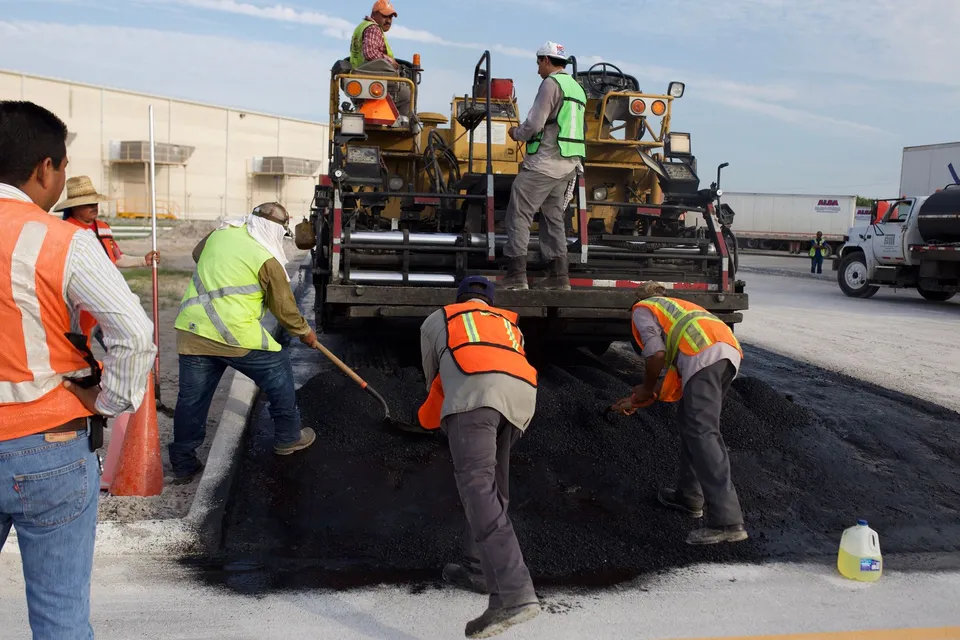
That matters because a construction title can hide very different work patterns. A home remodeler has to work around an existing building and its occupants, while commercial projects add coordination among specialty subcontractors and the owner’s operating needs. Civil and infrastructure work puts access, traffic, utilities, and field conditions at the center of sequencing. Installation and service can look less like one long jobsite and more like a series of shorter appointments. The same trade label can therefore describe a crew job, a customer-facing service route, or a travel-heavy civil assignment.
What the map changes for employers
For employers, the county line matters because the worksite location and the start point are part of the job itself. A worker who reports to a shop in Brainerd is making a different commitment than one who meets a crew at a Grand Rapids site or drives directly to scattered service calls. The research report on northern Minnesota work notes that rural distances raise practical questions that commute averages do not answer: where the paid shift begins, whether the crew meets at a shop or at a site, who handles equipment transport, and whether overnight travel is expected. Those are hiring details, not assumptions to make later.
A better posting uses the actual geography of the work. If the role is a service position, say whether the route is based out of one town or covers a wider territory. If it is a project role, say whether the crew stages from the yard, the site, or a temporary meeting point. If it is a remodel, explain whether the worker will be inside occupied homes, commercial spaces, or both. The more specific the map, the easier it is to separate a good candidate from a poor fit.
What the same map changes for applicants
Applicants face the same geography from the other side. DEED’s county commuting data show that among Crow Wing resident workers, 84.1% worked in their county of residence and the mean travel time was 23.1 minutes; in Itasca, 82.8% worked in county and the mean travel time was 24.1 minutes. That helps explain why a local opening can feel practical to one worker and impossible to another even when the wage looks similar on paper. It also reminds readers that commute data cover all resident workers, not just construction employees, and do not measure travel among changing sites.
Housing can change the choice just as much as distance. In the same DEED figures, median monthly rent was $971 in Crow Wing and $988 in Itasca, but 44.5% of Crow Wing renters and 58.1% of Itasca renters spent at least 30% of household income on rent. Median owner-occupied home value was $306,800 in Crow Wing and $225,200 in Itasca. Those numbers do not tell a relocating carpenter or operator exactly where to live, but they do show why a good job offer can still fail if the worker cannot secure a realistic housing arrangement.
One more reason the map matters is pay structure. A base hourly rate, overtime, benefits, and reimbursement for travel or lodging are not the same thing, and county averages do not tell you which are included in a specific offer. Applicants comparing an opening in Grand Rapids, Bemidji, or Brainerd should ask what is paid for time on the road, what starts when the shift starts, and whether the job depends on a single site or a moving route.
Seasonal work is real, but it is not one rule
Season also changes the answer. DEED’s Northeast analysis says the region had 7,341 construction-industry jobs in 2025, down 1.5% from 2024, while first-quarter 2026 construction and extraction occupation jobs were estimated at 8,440. Within that same broad region, historical Northeast heavy and civil engineering construction employment ranged from an average of 1,273 in the first quarter to 2,110 in the third quarter from 2019 through 2023. That does not mean every winter project stops, but it does show why a road or earthwork employer may need to talk differently about schedule and coverage than an indoor renovation or service role.
Training paths follow the same rule
Training and credential paths follow the same rule: good work opportunities are not the same thing as a universal opening in one town. The Minnesota DLI apprenticeship directory includes carpenter, cement mason, construction craft laborer, operating engineer, HVAC technician, pipefitter, plumber, sheet-metal, and other programs, but DLI says the directory is not exhaustive and that sponsors and employers lead hiring with different qualifications and schedules. DLI’s construction-electrician information also shows that some routes accept candidates through participating employers on a rolling basis while others use annual aptitude-test schedules. That is useful for applicants who want a path into the trades, but it does not create a universal intake calendar for Brainerd, Bemidji, or Ely.
A simple way to read any posting
The most useful hiring habit is to describe the job as a place, a pace, and a scope. Place means the shop, yard, site, or service territory. Pace means whether the job is steady, seasonal, travel-heavy, or tied to a project phase. Scope means whether the worker is doing carpentry, laboring, equipment operation, installation, maintenance, or supervision. The northern Minnesota evidence base shows that these questions matter more than a generic label because county labor markets, housing costs, and seasonal swings all shift the fit of the role.
That is why county figures need careful reading. A St. Louis County total cannot be pasted onto Duluth, Hibbing, Virginia, Ely, or the North Shore as if each town had the same labor base, and Cass or Crow Wing totals cannot be treated as Walker or Brainerd figures without context. The research notes that St. Louis County’s large population is spread across a geographically extensive county containing both Duluth and Iron Range communities, which is one reason local recruiting campaigns should name the actual work zone instead of the nearest big community.
Next step
If you are hiring, use the exact project location, schedule, and coverage needs when you ask for candidates through northernmnconstructionjobs.com/request_candidates.html. If you are applying, share your skills, availability, and work preferences clearly, or call Express at 218-WorkNow or email apply@expressprosmn.com.