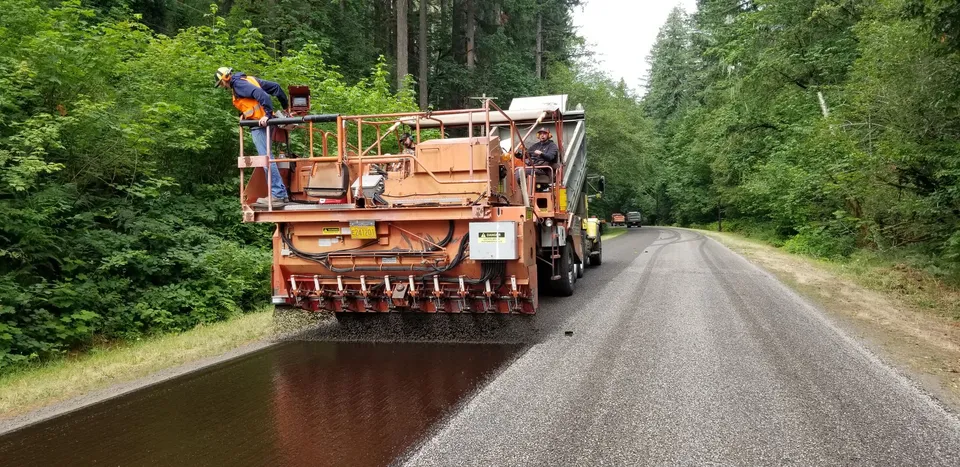
A northern Minnesota “construction job” can mean three very different daily realities: a fixed site crew, a service route, or shop support that feeds field work. That difference matters because the trade name alone does not tell you where the shift starts, how much travel is built in, who directs the work, or whether the job is tied to one project or many. BLS separates laborers, carpenters, electricians and construction managers, and it notes that laborer schedules vary and some highway work runs overnight. That is why the most useful question is not just what trade it is, but what work pattern it uses.
What the work pattern changes
A site crew, a service route and a shop-support role can all touch construction, but they do not ask for the same strengths. On a remodel, the worker has to move around an existing building and its occupants. On civil or highway work, access, traffic and field conditions shape the day. Installation and service often mean shorter customer appointments instead of one long jobsite stay. A fabrication or repair role can still be part of construction when it makes components for an identified building, equipment set or infrastructure project, but a general factory job is not automatically construction work just because it uses similar tools.
That is why “experience” needs a closer read. A helper may support a qualified crew. A registered apprentice follows a formal work-and-instruction path. A journey-level worker brings broader craft experience. Those are different things, and none of them should be treated as automatic authorization for regulated electrical or plumbing work. Minnesota DLI’s apprenticeship directory includes carpenter, cement mason, construction craft laborer, operating engineer, HVAC technician, pipefitter, plumber, sheet-metal and other programs, but the directory is not a guarantee of a seat in a particular town. Sponsors and employers still lead hiring.
Northern Minnesota is not one labor market
The regional numbers make the same point. DEED’s county profiles show 2025 construction-industry payroll jobs of 2,344 in Crow Wing County for the Brainerd-Baxter area, 1,209 in Itasca County for the Grand Rapids vicinity, 1,534 in Beltrami County for the Bemidji area and 480 in Cass County for the Walker area. Those are jobs at construction establishments, not counts of carpenters, electricians or other occupations, and they omit many self-employed workers. Northern Minnesota also should not be collapsed into one hiring pool: DEED’s 2026 Northeast regional analysis estimates 7,341 construction-industry jobs in the Northeast and 8,440 construction-and-extraction occupation jobs in first-quarter 2026, but neither figure tells you how many openings exist today.
That matters for applicants and hiring managers alike. A contractor in Grand Rapids may be trying to staff different work than one in Brainerd, Bemidji or on the North Shore. A smaller county total does not mean there is no construction work; it means the mix, scale and likely commute pattern may be different. In practice, the job description needs to say whether the position is tied to one project, a series of sites, a route of service calls or shop work that supports field crews.
Travel, housing and the real start of the day
Rural distance changes the conversation in ways a county average cannot capture. The important questions are where the paid shift begins, whether the crew meets at a shop or at the site, who handles equipment transport and whether multiple stops or overnight travel are expected. DEED’s ACS-based commuting figures show that 84.1% of Crow Wing resident workers worked in their county of residence, with a mean commute of 23.1 minutes, while 82.8% of Itasca resident workers worked in-county, with a mean commute of 24.1 minutes. Those figures describe all resident workers, not changing construction sites, but they do show why a “short drive” can mean something different in a spread-out region.
Housing can affect the decision too. In the same DEED-reproduced ACS data, median monthly rent was $971 in Crow Wing and $988 in Itasca, while 44.5% of Crow Wing renters and 58.1% of Itasca renters spent at least 30% of household income on rent. Median owner-occupied home values were $306,800 in Crow Wing and $225,200 in Itasca. That does not tell a worker where a vacancy exists, but it does explain why a role with changing sites, early starts or regional travel needs to be read alongside transportation, lodging and family schedule, not after them.
Seasonality is real, but it is not a universal winter shutdown
Some northern Minnesota work is seasonal, especially heavy civil and road-related work. DEED’s study of Northeast Minnesota payroll data found heavy and civil engineering construction ranged from an average quarterly employment of 1,273 in the first quarter to 2,110 in the third, with an annual average of 1,718. That is a strong seasonal swing, but it is not proof that all construction stops when the weather turns. BLS also notes that some northern-climate laboring work is weather-limited, while indoor renovation, occupied-building service, fabrication and equipment maintenance may follow different patterns. Employers should say whether winter means reassignment, fewer hours or a different project type.
Authorization is not the same as related experience
This is where many job searches go wrong. Minnesota DLI distinguishes between useful experience and legal authority. A registered unlicensed electrician must work under a person licensed for that work and within the employer’s authority; a registered unlicensed plumber must be a W-2 employee of an authorized plumbing contractor, restricted contractor or registered employer and work under direct supervision. For residential contracting, DLI also says a person or company contracting directly with a one-to-four-unit homeowner for work in more than one special-skill area generally needs the proper residential building-contractor or remodeler license. Related maintenance, low-voltage, mechanical or factory experience may be valuable, but it does not automatically authorize regulated electrical or plumbing work.
For employers, the practical takeaway is simple: say what the job actually requires and what it is not. For applicants, read the offer for the same details you would use to plan your week: where the shift starts, whether the crew stays in one place, whether winter changes the assignment, what tools or vehicle are expected, and whether a license or supervised status is involved. Those questions protect both sides from mismatches that look small on paper and become expensive after day one.
If you are comparing a role or writing one up, lead with the work pattern, the location and the schedule. Employers can share trade requirements and coverage needs through request candidates; applicants can call Express or use the listed email contacts to talk through fit before they say yes.